
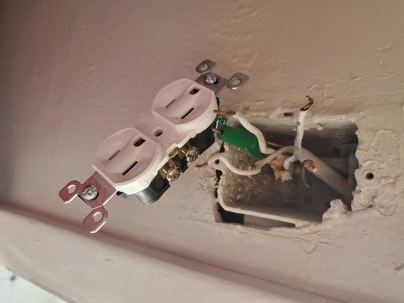
You might think adding an extra outlet in your Arlington home without a permit was a harmless shortcut, especially if everything still works when you plug something in. The room looks finished, the outlets match, and the lights come on, so the job feels good enough. That quiet voice that wonders about permits and code can be easy to ignore when nothing obvious is wrong.
The risk is that electrical problems usually start out invisible. A loose connection or overloaded outlet does not announce itself the day it is installed. It may sit behind a cover plate for months or years before it overheats under the right conditions. That is why cities like Arlington require permits for certain electrical changes and why your home insurer cares whether the work in your walls followed those rules.
As licensed electricians at Titans Electric, we deal with permits, inspections, and outlet failures in real homes every week. We often open an outlet that looks perfectly normal from the outside and find burnt insulation or melted backstabs inside the box. In this article, we will walk through how unpermitted outlet work creates hidden hazards, how Arlington-style permit systems are supposed to catch them, and how that can affect your insurance if a fire ever starts at the wall.
Why Unpermitted Outlet Work Is More Than a Paperwork Issue in Arlington
Many Arlington homeowners see permits as city paperwork, not as a safety tool. If a handyman swapped a couple of outlets or added a new one on an existing wall, it can feel like a small job that should not need city involvement. As long as the breaker did not trip during the work and everything powers up, it is easy to assume there is no real harm in skipping a permit.
In reality, a permit is what triggers an official inspection and creates a permanent record that your electrical changes were reviewed against current code. For outlet additions or moving outlets to new locations, that inspection is often the only time a qualified third party will see the wiring before it is covered by drywall, cabinets, or tile. Without that step, any mistake that got made during the installation is locked into your walls for the life of the home.
City inspectors in a place like Arlington do not just glance at the faceplates. They look at conductor size, box fill, grounding, required GFCI locations, breaker sizing, and more. When everything checks out, your permit history becomes a kind of safety receipt that insurers, buyers, and future electricians can rely on. Unpermitted outlet work, by contrast, creates a blank space in that record. If a fire starts around that area later, you have no official proof the work was ever reviewed for safety, and that is where problems with insurance can begin.
At Titans Electric, we pull permits when they are required and schedule inspections as part of our normal process. We build that into our projects because we know the value of having the city sign off on the work. It is not just about compliance. It is about knowing that if something does go wrong years down the line, there is documentation showing the system was installed to the standard that applied at the time.
How Bad Outlet Wiring Actually Fails Inside Your Walls
The most dangerous outlet is often the one that seems fine until the day it is not. Many unpermitted installations share the same set of problems. We find conductors jammed under loose screws, backstabbed connections used on circuits that carry more load than the device was designed for, and outlet boxes so crowded that wires are sharply bent or pinched under the device. None of this is visible until someone removes the cover plate.
Loose or poorly made connections create what electricians call a high resistance point. Current that should flow smoothly through copper has to squeeze through a tiny, unstable contact area. That restriction creates heat, similar to how a kink in a garden hose raises pressure at that point. Under a heavy load, such as a space heater, hair dryer, or vacuum, that hot spot can reach temperatures high enough to break down insulation and eventually char the box or surrounding materials.
Arcing is another failure mode we see often in unpermitted outlet work. When a connection loosens over time or wires are nicked during stripping, electricity can jump through small gaps instead of staying on solid metal. Those tiny arcs reach very high temperatures in a fraction of a second. Inside a plastic or older metal box with dust, paint, or wood close by, repeated arcing can ignite materials without always tripping a standard breaker quickly enough to prevent damage.
Location also matters. In kitchens, bathrooms, garages, and outdoor areas, electrical codes expect outlets to have ground-fault protection because moisture raises the risk of shock. In bedrooms and living spaces, arc-fault protection is often required because cords and devices get plugged and unplugged frequently. Unpermitted jobs frequently ignore these requirements, especially when someone runs a new outlet from an old, unprotected circuit. On the surface, the outlet may look like any other. Behind the scenes, it may lack the modern layers of protection that would shut power off the instant something starts to go wrong.
When our technicians at Titans Electric open these outlets, we see the end result of years of small mistakes. Melted insulation wrapped around a screw, scorched plastic at the back of a device, or aluminum and copper mixed together without proper connectors are all common sights. These are problems a code-compliant installation and an inspector’s visit are designed to prevent, and they are exactly the kinds of defects that insurers and fire investigators focus on after an incident.
What Arlington Permits & Inspections Are Designed to Catch
Permits and inspections in a city like Arlington exist because electrical systems do not forgive shortcuts. When you or your contractor applies for a permit to add or alter outlets, that application tells the city there will be changes to your wiring that should be reviewed. Depending on the scope, the inspector may look at rough-in wiring before walls are closed and then return for a final inspection when devices and cover plates are installed.
During these visits, inspectors follow a mental checklist that goes far beyond whether the outlet turns a lamp on. They look for correct wire gauge for the breaker size, proper box fill so conductors are not crammed into too small a space, solid terminations under the correct screws, and continuous grounding from panel to device. They verify that GFCI devices are installed and labeled where codes generally require them and that arc-fault protection is present on new or modified bedroom and living area circuits where applicable.
An inspector will also pay attention to installation quality that a homeowner might never notice. That includes securing cables within the right distance of boxes, using proper clamps or bushings so sharp edges do not cut into insulation, and confirming that junctions are accessible and not buried behind permanently installed finishes. When they sign off on the permit, they are certifying that, at that point in time, the work met the safety standards the city has adopted.
Those sign-offs become part of your property’s record. When a home is sold, buyers and their agents sometimes check permit history to understand what has been altered. When a fire occurs and insurance gets involved, adjusters and investigators may look at whether the area where the incident started was ever modified and if so, whether it was done under an open, inspected permit. Having that paper trail does not just keep the city satisfied. It helps show that you, as the homeowner, took reasonable steps to keep the electrical system safe.
Because we at Titans Electric work within local and state safety standards on every project, we design our installations with this inspection process in mind. Our goal is to have the work pass on the first visit because that means your wiring is built right, documented, and less likely to cause future trouble with the city or your insurer.
How to Tell If Your Home Has Unpermitted or Unsafe Outlet Installations
Homeowners often have a sense that something is off before they know exactly why. Maybe certain outlets feel loose when you plug things in, or a cover plate never sits quite right. Visible clues like mismatched devices, outlets mounted at odd heights compared to others, or faceplates that are badly cut around tile or trim can all hint that someone modified the wiring after the original construction.
Functional symptoms are another warning sign. If breakers trip often when you use a hair dryer and a space heater on the same wall, or if lights flicker when certain outlets are in use, that can point to overloaded circuits or poor connections. Outlets or switches that feel warm to the touch, discoloration around the strap or cover, and buzzing or crackling sounds are signs that you should stop using that device and have it checked promptly.
From the outside, most homeowners and even general home inspectors are limited in what they can safely see. Inspectors typically do not remove outlet covers or load-test circuits. They may catch obvious DIY issues, such as open junction boxes or exposed splices, but they cannot see high-resistance connections buried behind devices or undersized wires on oversized breakers without taking things apart.
If you suspect prior unpermitted work, or your home has areas that were finished out after the original construction, it is worth scheduling a focused electrical safety inspection. A licensed electrician can remove selected devices, check terminations, verify box fill and conductor sizes, and test breakers and GFCI or AFCI devices. That targeted look gives you a clear picture of whether your outlets are just old or truly unsafe.
When we perform these evaluations at Titans Electric, we document what we find in plain language. That report can be helpful if you are planning to sell, negotiating with a buyer about repairs, or simply wanting a record to show your insurer that you addressed known issues before they caused damage.
Bringing Unpermitted Outlet Work Up to Code Without Turning Your Home Upside Down
Discovering unpermitted or unsafe outlet installations does not automatically mean your house needs a full rewire. Most corrections fall into manageable categories once a professional has evaluated the scope. In many cases, we can bring a circuit up to current standards with a combination of better terminations, properly sized boxes, added protection devices, and, where needed, short runs of new cable.
The typical path starts with an assessment to map out which circuits were touched by past work and how extensive the changes are. From there, we develop a plan that might include re-terminating outlets on screw terminals instead of backstabs, replacing damaged or undersized boxes, adding GFCI protection in required locations, or upgrading breakers to modern protective devices where appropriate. If we find severely overloaded or improperly extended circuits, we may recommend adding a new circuit from the panel to serve that area correctly.
Where local rules allow, you can often obtain a retroactive permit so that corrected work is inspected and documented going forward. Inspectors usually need to see enough of the wiring to verify safety, which can mean opening certain walls or access points. A careful electrician can often minimize that disruption by targeting key areas rather than tearing out entire surfaces. The goal is to give the inspector a clear view of how the system is now built, not to expose every inch of cable in the house.
Costs and timelines vary with the size of the home and the extent of past shortcuts, but in nearly every case, bringing outlets up to code is far less expensive than repairing fire damage or dealing with a disputed claim. You are trading an uncertain, open-ended risk for a defined project with a clear endpoint and documentation to back it up.
Because Titans Electric handles electrical systems across their full life cycle, we can fold this corrective work into broader improvements if you have other projects in mind, such as lighting upgrades or panel modernization. That approach often saves time and money compared to tackling each issue separately and leaves you with a more robust, future-ready electrical system.
When to Call a Licensed Electrician About Unpermitted Outlets in Your Arlington Home
The right time to bring in a licensed electrician is usually sooner than homeowners think. If you know or strongly suspect that outlets were added or moved without a permit, especially in areas like kitchens, bathrooms, garages, finished basements, or outdoor spaces, it is wise to have them checked before you increase the load or make further changes. The same is true if you are seeing symptoms like warm faceplates, frequent breaker trips, or flickering when high-draw devices are used.
Upcoming life events are another good trigger. If you are preparing to sell your home, planning a renovation that will build on existing circuits, or approaching a major insurance renewal or coverage change, getting a clear picture of your outlet and circuit condition can prevent last-minute surprises. Addressing issues before a buyer’s inspector or claims adjuster finds them gives you more control over timing and cost.
When you call Titans Electric, we start with a conversation about what you are seeing and what work you know has been done. From there, we can recommend an appropriate level of inspection, explain where permits are likely to be needed, and outline a correction plan that fits your budget and schedule. Our focus is on clear communication, code-compliant solutions, and building a long-term relationship so you always know who to call with electrical questions.
Unpermitted outlet work in an Arlington home is not just a line item on a city form. It is a gap in the safety and documentation chain that connects your wiring, your family’s safety, and your insurance coverage. Closing that gap with solid, inspected work is one of the most effective ways to reduce both fire risk and financial risk over the life of your home. If you are unsure about the history of your outlets or recent work, we are ready to help you sort it out.